Podcast: Following the Threads

After an adult autism diagnosis, author Natasha Stavros (PhD) and Sarah Liebman (MFT, diagnosis ADHD) use story to share wisdom and resources to support others in adult autism and adult ADHD diagnoses.

Podcast: Following the Threads

In this podcast, Following the Threads, seasons follow different threads of adult autism and neurodivergence including ADHD and AuDHD. Learning to unmask is a major undertaking and the wisdom to find resilience through change comes through lived experiences and story, it is in sharing this wisdom that we grow as a community.

Podcast Promises
Narrative nonfiction author, Natasha Stavros, PhD

Our FAQs

Frequently Asked Questions

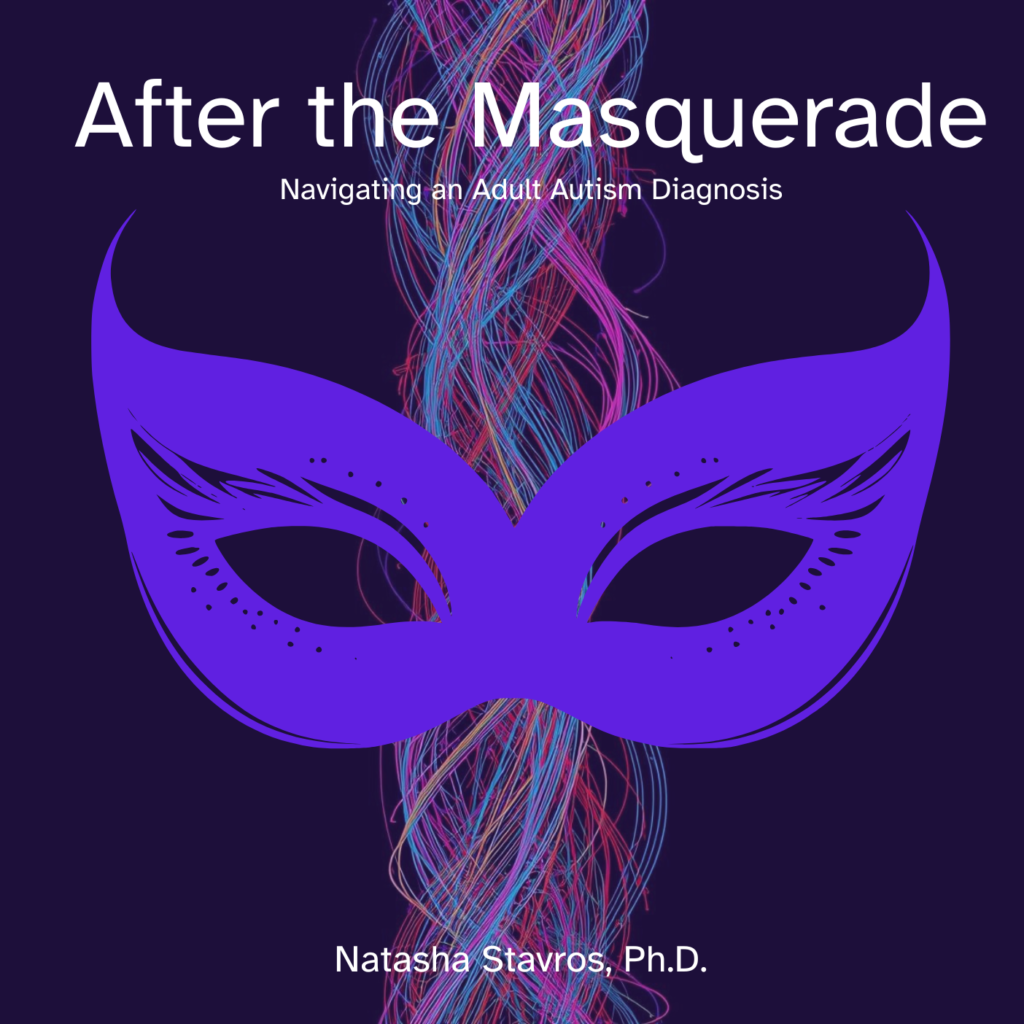
"After the Masquerade", a memoir, substack, and podcast exploring the process of unmasking after an adult autism diagnosis, a path to resilience through change.

In Season 1: The When, How, What, and Why of Getting a Diagnosis, uses The Unmasking Diary with real life stories on neurodiversity and the everyday process of autistic unmasking, author Natasha Stavros, PhD speaks with licensed psychotherapist, Sarah Liebman, diagnosed ADHD and special interests all things neurodiverse. Season 1 uses Natasha’s life as a case study to follow the threads of her early unmasking experience. She offers her experience and story to join the community of late-diagnosed neurodivergent people and explores social, psychological, and spiritual frameworks that empower resilience through a major life change. 

Seasons 2 through 8 offer wisdom by listeners who share their stories of a time when they learned a valuable lesson as a neurodivergent adult navigating a neurotypical world. Because the process of learning to unmask is messy, so too is the chronology of production. Episodes do not follow the chronology of season progression from 2 to 8, rather they organize episodes by different threads: identity (Season 2), pathology (Season 3), employment (Season 4), romantic relationships (Season 5), work relationships (Season 6), friendships (Season 7), parenting (Season 8).

After the Masquerade is my second book. To promote the book, the substack A Jester’s Musings hosts a section: After the Masquerade, which consists of a fortnightly newsletter and a corresponding podcast. In The Unmasking Diary, I write about different topics that occur over the course of learning to unmask. In the podcast Following the Threads, we unpack the daily transitions as I unmask with friend, neighbor, and licensed psychotherapist who has ADHD and a special interest in all things neurodiverse.

After the Masquerade represents a shift from spectacle to intimacy, performance to revelation, and from public identity to private identity. Masquerade balls were historically about performing for social survival through costume and controlled intimacy. Autistic masking parallels this through studied performance with the high stakes of social acceptance, social scripting, and ultimately exhaustion from maintaining a facade.

The Unmaking Diary continues my short (<750 word) personal essays of intellectual, spiritual, and emotional exploration inspired by work to unpack, process, and repackage my life and be more accommodating of my… honestly - I don’t even know what to call it, a disability? A capability?

Following the Threads originates from Greek mythology when Theseus used a ball of thread to navigate out of a labyrinth. Using this metaphor we navigate the complexity of unmasking using individual episodes and series to track continuous narratives.

In the era of AI, it’s important to note that this book is more than intelligence, it’s wisdom - and that, cannot be done by Artificial Intelligence; it can only be done by human intelligence. 

As such, we’d like to distinguish that no generative artificial intelligence (generative AI) was used in the final production of this podcast. All of the text was written and iterated by the author without aid from artificial intelligence. AI was used as a by-product of google searches. Generative AI was used to brainstorm marketing strategies including substack article titles and short descriptors for each social media audience, podcast transcripts, show notes, and the background of the cover image. The substack articles are first written by the author, edited by the author, and uploaded to Generative AI with the prompt to help find a title and short description. The author edits AI titles, short descriptions, and show notes before final publication.

This podcast does not authorize use of our podcast - in any modality - to be used or fed into any generative artificial intelligence platforms. Doing so constitutes a violation of copyright.

The way I see it, that’s an inevitable truth to who I am. Vulnerable authenticity is my dharma, it is foundational to who I am, it is my service to the world, and it is my righteous duty.

No matter what, I have to live with the burden and the weight of the truths in my life; if sharing that truth helps shoulder some of that burden for somebody else, then why not?

There is a Taoism proverb (and I wish I knew its reference, if you know please share!) that says that when you give something a name, it loses its power. And that's what my story is. It shines a light on the truth of the hardship of what it is to be underserved in the greater societal context.

The truth is that it absolutely does change the way that people interact with me, and it is vulnerable. The thing is that this way, I'm writing the story. I am empowered to claim my story. I'm done living other people's stories of me, not even believing my own reality. I believed that I was bad, when I knew it's not true.

I am not a bad person. I have a deep moral compass. In fact, people come to me asking for advice about what to do morally. This is actually a common strength of autism - the unabashed commitment to truth at any cost.

So, if people are afraid of my story and what it might imply about them, then that's healthy shame. Healthy shame is shame that originates from the choices that you make. Unhealthy shame is shame that has nothing to do with the choices that you make, it's superficial, it's what you were born with. It’s your skin, your hair, your brain - your DNA. Any shame you feel about those things, that’s unhealthy because guess what - you are not fundamentally wrong. You were born into this world no different from anybody else, just a bunch of cells trying to live and survive and reproduce. At the most basic level, that's what you're trying to do and that doesn't make you good or bad. What makes you good or bad are your choices. And it is a choice to uphold social constructs that rank some groups more worthy than others. There is no reason why we have to buy into them.

Contact me with the details of your request and we can discuss from there. 

After the Masquerade is a memoir sequel to the narrative non-fiction survival guide for change makers, Burning Inside Out. Burning Inside Out launches and will be available at a bookstore near you in December 2026.

As such, After the Masquerade is in the process of being written, with snippets from the book shared via the fortnightly newsletter and podcast through the A Jester’s Musings substack.

I am currently seeking an agent for publication. If you are interested in representing me, please email me.